Bangkok Street Food: What to Eat, Where to Find It, and How to Order Confidently
Learn what to order from Bangkok's legendary street food vendors, where to find the best stalls in every neighborhood, and how to navigate menus when you don't speak Thai.
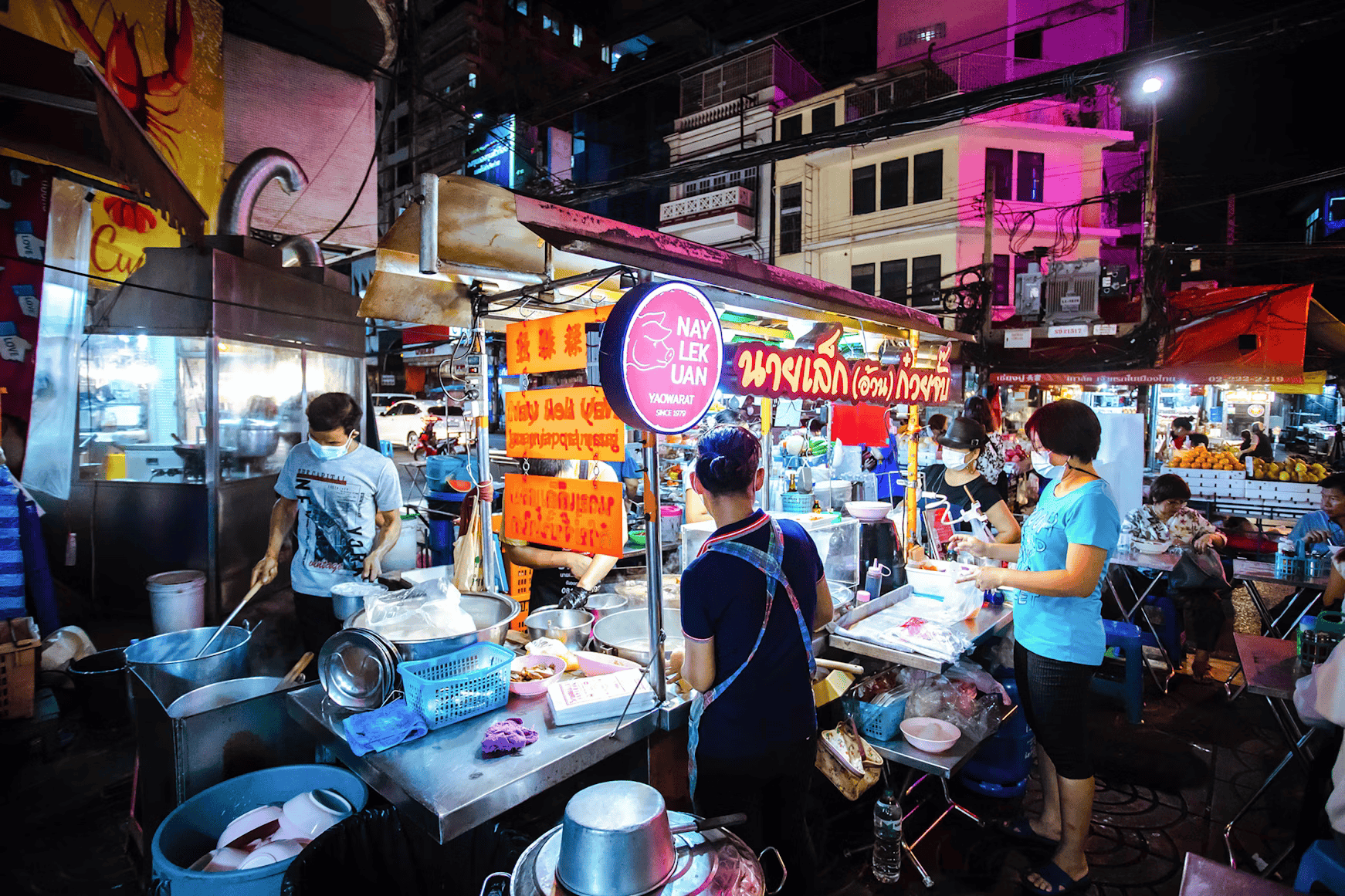
Vibrant night market scene in Bangkok showcasing diverse street food vendors and lively atmosphere.
Why Bangkok’s Street Food Scene Deserves Your Time
Bangkok’s street food is one of the best ways to experience Thai cuisine. Vendors line nearly every block, especially in Chinatown, Sukhumvit, and the Old City. The food is cooked fresh in front of you and costs a fraction of restaurant prices. This guide covers what to eat, where to find it, and how to order with confidence.
Dishes Worth Trying on Bangkok’s Streets
Start with pad thai, the stir-fried rice noodle dish that balances sweet, salty, and tangy flavors. Most street stalls offer it. Ask for shrimp, chicken, or tofu, then customize with lime, chili flakes, and crushed peanuts from the condiment tray.
Khao pad is Thai fried rice. It’s simple, reliable, and everywhere. Vendors cook it with egg, garlic, onion, and your choice of protein. It’s a solid option when you want something mild or feel overwhelmed by choices.
Som tam is green papaya salad. It’s spicy, tangy, and refreshing. Vendors pound the ingredients in a mortar right in front of you. Ask for it mild by saying “mai pet” (not spicy), though traditionally it comes quite hot.
Gai yang is grilled chicken, marinated and cooked over charcoal. It’s smoky and flavorful, usually served with sticky rice and a tangy dipping sauce. You’ll spot it at night markets and along busy streets in the evening.
Moo ping is grilled pork skewers. They’re small, sweet, and slightly charred. Vendors sell them by the stick near bus stops and markets. They’re cheap and easy to eat while walking.
Khao man gai is poached chicken over rice cooked in chicken fat, served with ginger-chili sauce and a small bowl of broth. It’s a Chinatown staple. The best stalls have lines during lunch.
For dessert, try mango sticky rice (khao niao mamuang). Fresh mango slices come with sticky rice and sweet coconut cream. You’ll find it at dessert carts in the late afternoon and evening.
Neighborhoods With Strong Street Food Scenes
Chinatown, locally called Yaowarat, is the most concentrated street food zone in Bangkok. Go in the evening when Yaowarat Road closes to traffic and vendors fill the street. You’ll find seafood grills, noodle soups, and dim sum carts. Start near Wat Traimit and walk east.
The Old City around Khao San Road and Phra Athit Road has both tourist stalls and local vendors. Phra Athit offers better food and fewer crowds than Khao San. Expect pad thai, grilled meats, and fruit shakes.
Sukhumvit Soi 38 used to be a famous night market. It’s been relocated and scaled down, but vendors now operate near Thong Lo BTS station in the evening. It’s cleaner and more organized than Chinatown, with pad thai, grilled seafood, and mango sticky rice.
Victory Monument has a strong local food culture, especially during morning and lunch. You’ll find khao man gai, boat noodles, and fried chicken. It’s less touristy and more practical, which means lower prices and faster service.
Or Tor Kor Market, near Chatuchak Weekend Market, is a covered market with prepared food stalls. The quality is high and the setting is clean. It’s a good choice if you want street food flavors without the chaos of an actual street setup.
How to Order When You’re Not Sure What to Say
Point at what you want if you don’t know the name. Most vendors are used to tourists and will understand. You can also point at someone else’s plate if it looks appealing.
Learn a few useful phrases. “Khao pad gai” means chicken fried rice. “Mai pet” means not spicy. “Nit noi” means a little bit. “Aroi” means delicious, and vendors appreciate hearing it.
Use the condiment tray. Most stalls provide chili flakes, fish sauce, sugar, and vinegar with sliced chilies. Thais season at the table, so your dish may taste mild until you adjust it yourself.
Watch the vendor’s setup before ordering. If the station looks clean, the ingredients look fresh, and locals are eating there, it’s usually a safe bet. High turnover is a good sign.
Carry small bills. Street vendors rarely have change for large notes. Twenty and fifty baht notes work best. Most dishes cost between thirty and sixty baht.
Eat where locals eat. If a stall has a line of Thai people during lunch or dinner, the food is worth trying. Tourist-heavy areas sometimes sacrifice quality or inflate prices.
What You Should Know About Food Safety
Bangkok street food is generally safe if you choose vendors carefully. Look for stalls that cook food to order instead of letting it sit out. Grilled meats, stir-fried dishes, and noodle soups are usually fine because they’re cooked at high heat.
Most vendors now use commercially produced ice, which is safe. If you’re concerned, stick to bottled water, which is widely available and inexpensive.
Wash your hands or use hand sanitizer before eating. Many stalls don’t have nearby sinks. Carry a small bottle of sanitizer.
If you have a sensitive stomach, start with mild dishes and work your way up over a few days. Jumping straight into intensely spicy som tam or rich curries can be rough.
Pick One Dish and Go From There
If you’re new to Bangkok street food, start with khao man gai or pad thai. Both are mild, approachable, and available everywhere. Once you’re comfortable, try grilled meats, noodle soups, and spicier salads. Focus on what looks fresh, smells good, and draws a crowd.

The World Is Full of Wonders. Go Find Them.




Your Daily Dose of Wonder.
Everyday a new quiz, tip or destination to inspire you. Challenge your friends and grow your knowledge.